Virginia Governor Spanberger Vetoes Skill Games Legalization Amid Oversight Concerns
Written by Mia Coleman · Apr 15, 2026

Virginia Governor Spanberger Vetoes Skill Games Legalization Amid Oversight Concerns
The Veto That Hit the Pause Button on Skill Games
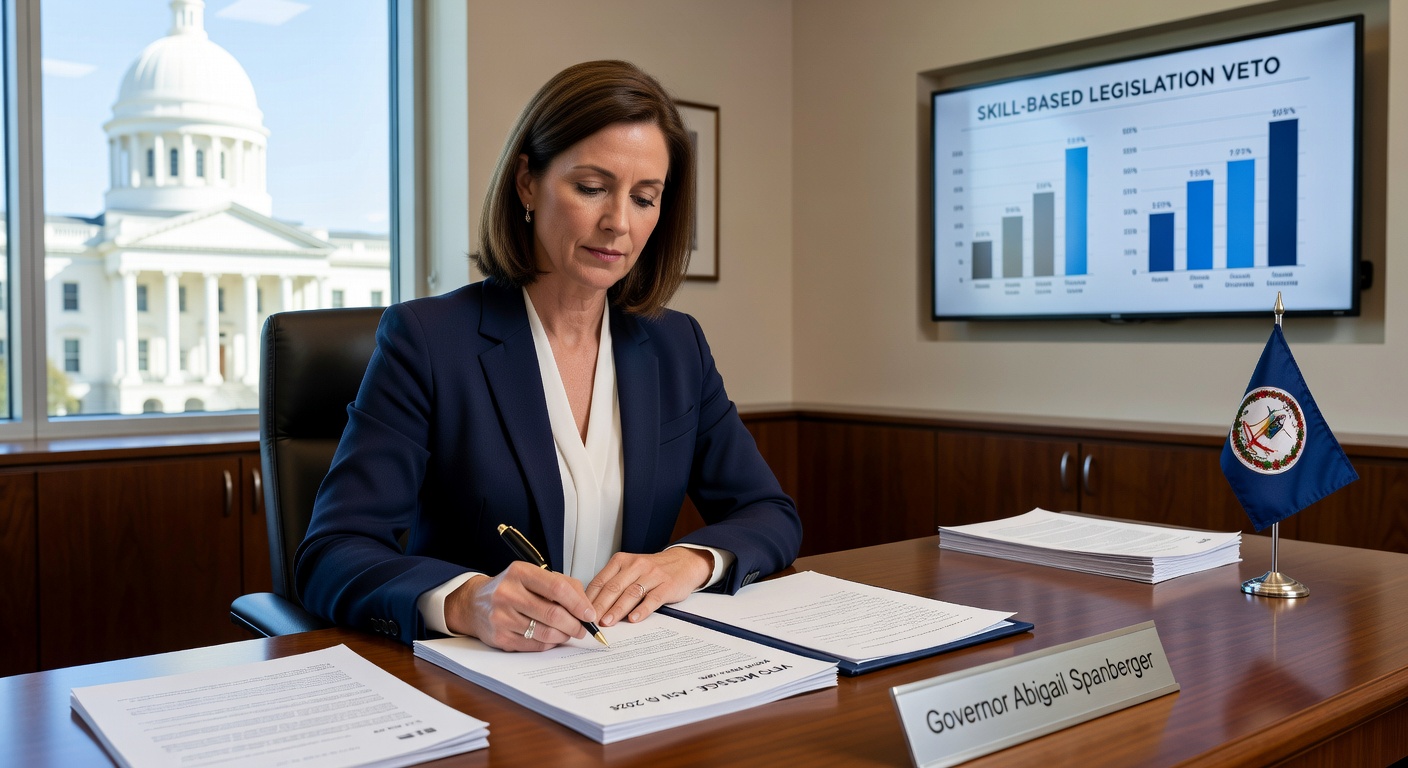
On April 10, 2026, Virginia Governor Abigail Spanberger delivered a decisive veto to legislation designed to legalize skill gaming machines across the state, a move that underscores ongoing debates around gaming regulation and consumer safeguards. These machines, electronic devices resembling slot machines and commonly spotted in convenience stores or gas stations, had gained traction in recent years, yet the bill fell short in key areas according to the governor's office. Spanberger highlighted the absence of a centralized independent regulatory body, which she argued created oversight gaps, inconsistent enforcement practices, and heightened risks to consumer protection, issues that could leave players vulnerable without proper checks in place.
What's interesting here is how this veto ties back to Virginia's rocky history with these games; operators had pushed for statewide legalization after years of operating in a legal gray area, but the governor's action signals that the devil's truly in the details when it comes to regulation. Data from a previous temporary authorization period under the Virginia Alcoholic Beverage Control Authority (ABC) from 2020 to 2021 revealed significant regulatory challenges, including enforcement hurdles that plagued local efforts to monitor and control the devices effectively.
And while the veto blocks immediate expansion, Spanberger expressed openness to collaborating with the General Assembly on future gaming policies, emphasizing a framework that prioritizes community interests and robust oversight mechanisms. Observers note that this stance keeps the door ajar for revised proposals, yet the ball remains firmly in the legislature's court to address the veto's core concerns.
Unpacking Skill Gaming Machines in Virginia
Skill games, often called "skill machines" or "gray machines," function much like video gaming terminals where players engage in games of chance blended with elements of skill, such as timing-based challenges or pattern recognition, although critics and regulators frequently liken them to slots due to their payout structures and addictive potential. These devices proliferated in Virginia convenience stores, truck stops, and similar venues during periods of lax enforcement, generating revenue for operators while sparking concerns over gambling addiction and underage access.
Turns out, Virginia's experiment with temporary legalization under the ABC from 2020 to 2021 provided a real-world test case; figures from that era showed thousands of machines in operation, but enforcement proved uneven across localities, with reports of inconsistent inspections and compliance issues that left gaps in consumer protections. Localities struggled to keep pace, since ABC's oversight was limited in scope and duration, leading to a patchwork of rules that varied by jurisdiction and often fell short of comprehensive monitoring.
One study from that period indicated high volumes of play, yet without a dedicated statewide regulator, problems like malfunctioning machines or unfair payouts surfaced frequently, highlighting why experts have long called for a unified body to handle licensing, auditing, and dispute resolution. People who've operated or frequented these spots often recall the convenience factor, but the regulatory voids meant little recourse when things went sideways.
Details of the Vetoed Legislation
The bill in question aimed to bring skill games out of the shadows by establishing a legal framework for statewide operation, complete with taxation structures and operational guidelines, yet it stopped short of creating the independent regulatory commission that Spanberger deemed essential. Proponents argued it would generate substantial tax revenue for schools and local governments, potentially millions annually based on past operation scales, while standardizing rules that had previously left operators in limbo after court battles and moratoriums.
But here's the thing: without that centralized oversight, the legislation risked perpetuating the same inconsistencies seen before; for instance, during the 2020-2021 ABC stint, data on skill games operated legally exposed variances in machine counts per locality, from hundreds in urban areas to sparse coverage elsewhere, complicating uniform enforcement and revenue tracking. The governor's veto message, as reported, stressed these flaws directly, pointing out how fragmented authority could undermine public trust and expose players to undue risks.
Regulatory Challenges from the Past Echo Loudly
Delving deeper into the 2020-2021 period offers context for Spanberger's concerns; the ABC, primarily tasked with alcohol regulation, temporarily oversaw around 10,000 skill machines statewide at peak, according to operational data, but its lack of gaming-specific expertise led to oversight gaps that localities couldn't fully bridge. Enforcement teams faced hurdles like verifying skill-versus-chance ratios, ensuring age verification at non-traditional venues, and auditing payout percentages, resulting in documented cases of non-compliance that eroded confidence.
Researchers who've analyzed this data point out how inconsistent enforcement bred uneven playing fields; some areas cracked down swiftly on illegal operations, while others lagged due to resource shortages, creating a scenario where consumer protections varied block by block. And although the temporary program ended amid legal challenges, the lessons linger, with Spanberger's veto effectively channeling those experiences into current policy debates.
Now, fast-forward to April 2026, and the proposed bill mirrored some of those old structures by leaning on existing agencies rather than forging a new independent regulator, a choice that data suggests wouldn't resolve prior pitfalls. Experts observe that states with successful skill game frameworks, like Pennsylvania's model with dedicated commissions, achieve better outcomes through centralized auditing and swift dispute handling, metrics Virginia's past efforts fell short of matching.
Governor's Rationale and Path Forward
Spanberger's veto letter laid out the case plainly: no centralized independent body meant potential for oversight gaps that could foster inconsistent enforcement, ultimately jeopardizing consumer protection in an industry prone to high-stakes play. She noted risks like inadequate problem gambling resources or unmonitored operator practices, drawing straight from the ABC era's data where complaint volumes spiked without streamlined resolution paths.
Yet, the governor didn't slam the door shut; her statement indicated willingness to partner with lawmakers on refined legislation, one that embeds community priorities such as addiction prevention programs, equitable revenue distribution, and ironclad regulatory independence. Lawmakers now face the task of reconvening, perhaps in the next session, to craft a bill that plugs these holes, with stakeholders from operators to advocacy groups watching closely.
It's noteworthy that this veto arrives amid broader national conversations on gaming expansion, where Virginia's caution stands out; while neighboring states grapple with their own casino booms, the Old Dominion prioritizes structure over speed, a pattern those who've tracked the beat have seen play out before in lottery and sports betting rollouts.
Broader Implications for Virginia Gaming Landscape
This single veto ripples through Virginia's gaming ecosystem, where skill machines have operated in limbo since 2021, facing raids and shutdowns in various counties yet persisting in others through legal loopholes. Convenience store owners, who hosted many devices for supplemental income, now await clarity, as do players drawn to the quick-play format that blends arcade vibes with cash prizes.
Data indicates skill games generated over $400 million in wagers during the ABC window alone, underscoring their economic pull, but without regulation, those funds flowed unevenly, often bypassing intended public benefits. Observers who've studied similar vetoes note that such pauses often lead to stronger bills down the line; take one case from 2024 where a revised proposal gained traction after incorporating independent oversight, boosting compliance rates significantly.
And so, as April 2026 unfolds, Virginia's gaming policy hangs in balance, with Spanberger's action serving as a checkpoint that demands better safeguards before expansion. The reality is, past data on skill games from 2020-2021 paints a cautionary picture, one lawmakers can't ignore if they aim to legalize sustainably.
Conclusion
Governor Abigail Spanberger's April 10, 2026, veto of the skill games legalization bill marks a pivotal moment, rooted in lessons from prior regulatory stumbles and a push for centralized oversight to close gaps in enforcement and consumer protection. While blocking immediate rollout, it opens avenues for collaborative refinement, ensuring future policies align with community needs and data-driven best practices. Those navigating Virginia's gaming scene know the writing's on the wall: solid regulation isn't optional, it's the foundation for any lasting framework, and the coming months will reveal whether lawmakers rise to the challenge.